Three Days or a Week? Plan Your First Ski Trip Around Tired Legs
You’re pricing up your first ski trip, and you’re having the thought everyone has: if I’m paying for the flights anyway, I might as well stay the week.
Don’t.
Book three or four days. Four is the ceiling.
WeSki’s lesson guide takes the other side. It calls a full week of morning lessons the most effective format for first-timers, and it has a point, which I’ll get to. But WeSki won’t be the one inside your legs on day five.
My case against a week is about your body. Skiing will be a very unusual thing to ask of it. Your muscles will be sore, your joints quite possibly too, and the whole business can be properly hard physically. I try to get in 5–7 days each season now, and the trips I’ve made recently have been short: 3–4 days at Grandvalira in Andorra, and a few at Saint-Lary-Soulan in the French Pyrenees.
Why I’d stop at four days
A whole week is probably too much for the first time. Seven mornings of lessons sounds perfectly sensible on a booking page, where nobody’s thighs are involved, but the body that turns up on day five is the one that has already done days one to four.
The argument for going longer is a decent one, and it’s the reason to take four days over three if you can. WeSki says most beginners see their biggest improvements between days three and five, and that a three-day lesson block can end before they’ve built the repetition they need. A very short trip can send you home just as things begin to click. A fourth day lands right in that window.
The same guide says group lessons usually last two to three hours, often in the morning, which is a far better shape for a ski day than treating a lift pass like an all-you-can-eat buffet. You get teaching and practice while you’re fresher, then you decide what the rest of the day should be.
My first outing was much smaller than that. At Sierra Nevada, I spent about two hours practising on a green children’s slope. It was a great first trip, but if a friend asked me how to plan theirs, I’d tell them to get an instructor for the first two or three days and start on green runs. On a four-day trip, that’s most of the trip, which is rather the point.
Can’t get four days off? Book what you can. Three days of skiing is more useful than a perfect plan that never makes it out of your browser tabs. Just go in knowing what those days are for: getting started, not leaving as the friend who declares every red run “easy”.
Your legs decide when the ski day ends
You might be fine with a long walk or a gym session and still be surprised by how quickly skiing wears you out. WeSki notes that ski muscles tire quickly, especially in the first few days, and recommends leaving afternoons free after lessons so beginners can recover.
So don’t plan each day by counting how many hours the lifts are open. Plan a morning lesson, then see what you’ve actually got left. If you’re tired, stop. If you’ve still got energy, you can choose whether more gentle practice makes sense. The afternoon is an option, not a debt you owe the lift-pass company.
There’s a safety reason to be firm about this. University of Utah Health says a majority of ski injuries happen in the late afternoon, often on that tempting “one more run”. It points to muscle fatigue and discusses the ACL in particular. An afternoon run won’t automatically end badly, but exhaustion is still a poor reason to carry on, even if everyone else wants another lap.
I believe you’re more likely to get injured when you’re completely exhausted. So if the answer to “Do I want another run?” is really “I paid for the pass,” I’d call it a day. Especially if you’re starting skiing in your thirties or forties, there’s no prize for chasing speed or squeezing the last drop out of tired legs.
An afternoon off is part of the trip
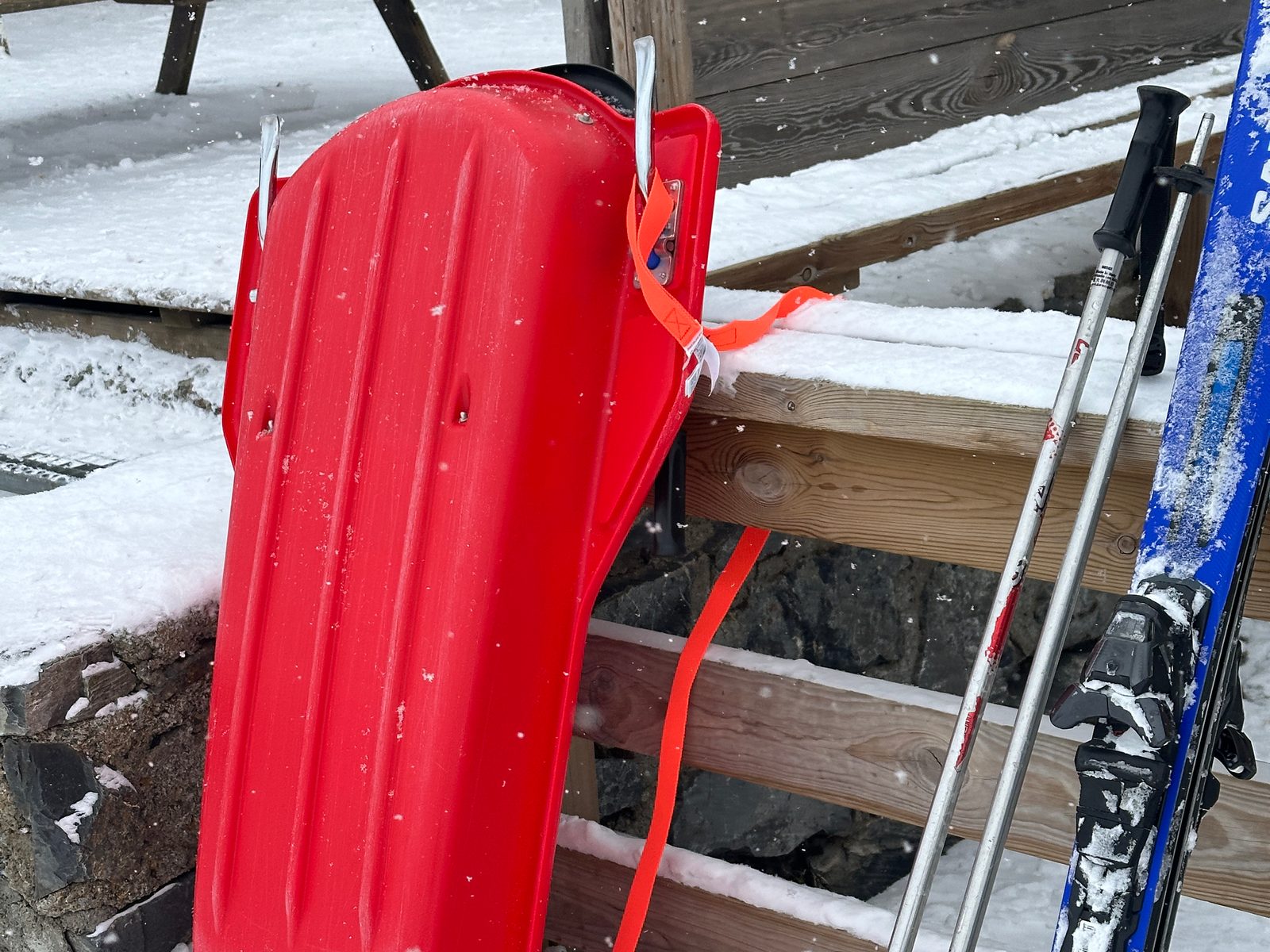
Rest doesn’t have to mean sitting indoors while everyone else talks about snow. You can finish after your lesson, have a proper break and still be glad you came to the mountains. If you want another snow activity, try sledding.
At Christmas 2019, I went sledding at Eggalm in Austria with my daughter, who was four. The run was long, about 20–25 minutes, and it was really fun. It’s also a very long time for your ski muscles to have the afternoon off.
Some afternoons on a first trip may be for more skiing; others may be for doing something else entirely. Stopping is how you give yourself a better chance of enjoying the next morning’s lesson.
Won’t you improve faster if you keep practising all afternoon? Remember what you’re trying to buy with the extra time. You want useful practice, not simply more hours standing on skis while your legs ask to speak to management. Four days with short afternoons will give you more good mornings than a week spent limping through.
What three or four days can and can’t do
Last year I skied 3–4 days at Grandvalira with friends, and before that I spent a few days at Saint-Lary-Soulan. Skiing with much more experienced friends in Andorra helped my skills a lot, but their pace is no template for your first time on snow.
Think of a three-day trip as a first taste. Get lessons, stick with beginner terrain and leave room to rest. If day one feels awkward, you’ve still got time to return the next morning. If day three is when things start making more sense, great, just don’t be surprised if you wish you had another day, which is WeSki’s point about days three to five.
A fourth day gives you more breathing room, but it isn’t a reason to force an extra run into every afternoon. Better to arrive at the last morning wanting to ski than to spend the whole trip trying to justify the booking.
Friends can make a short trip brilliant, provided you’re honest about the difference in ability. Skiing with people better than you has its own rules.
If someone is pushing you towards a week on the grounds of value, ask what the extra days are meant to buy. Will your legs be able to use them? Will you enjoy days five, six and seven, or feel pressured to ski constantly because you’ve paid for them? Even if you can comfortably afford the week, I’d keep a first trip to three or four days. If you love it, the next one can be longer.
Price the days you’ll actually use
A short trip can keep the initial bill smaller, but don’t assume every day needs the same lift pass. Look at what the resort sells for beginners and what area each ticket covers.
For a concrete example, the official Saint-Lary 2026/27 winter price sheet lists an adult two-day Initiation pass at €84 from 4 December to 12 March, and €63 from 13 to 29 March. Treat it as a starting figure for the lift pass, not the cost of the whole trip: you still need lessons, equipment, travel and somewhere to stay.
The same sheet lists a separate Premières Glisses one-hour adult pass at €21.50 until 12 March. It gives access to two covered carpets at Pla d’Adet, doesn’t include the lifts up from the village, and is sold only at the beginner-area ticket office there. Names on a price sheet can flatter a ticket, so ask the ski school which pass to get. The ski pass article goes through the choices.
Leave room in the budget for insurance, too. I always buy it at the resort because rescue can be expensive. Saint-Lary’s 2026/27 sheet lists basic insurance covering on-piste rescue costs at €3.70 per person for a one-day pass. Read what any policy actually covers, since that one line won’t take care of every possible cost.
A long journey can make a short trip feel like poor value, and that’s the strongest argument for stretching to a fourth day. It isn’t an argument for a seventh. The best-value booking is the one that buys you enough learning time and leaves you able to use it.
Book the lessons first, then build the trip around them
If you’re nervous about holding up a group, say so when you book. WeSki suggests a private lesson for first-timers who want one-to-one attention without the pressure of keeping pace with others. Otherwise, morning group lessons give your ski days a useful shape and leave the afternoon flexible.
Whatever the length, I’d put the instructor first: two or three days of lessons, and no going cheap on them. Then start gently, rest when you’re tired, and don’t let a paid-for pass talk you into “one last run”.
Book the mornings and give your legs a say in the afternoons. If you come home sore and already looking at next season’s dates, four days was exactly the right length.