Skiing With Friends Who Are Better Than You
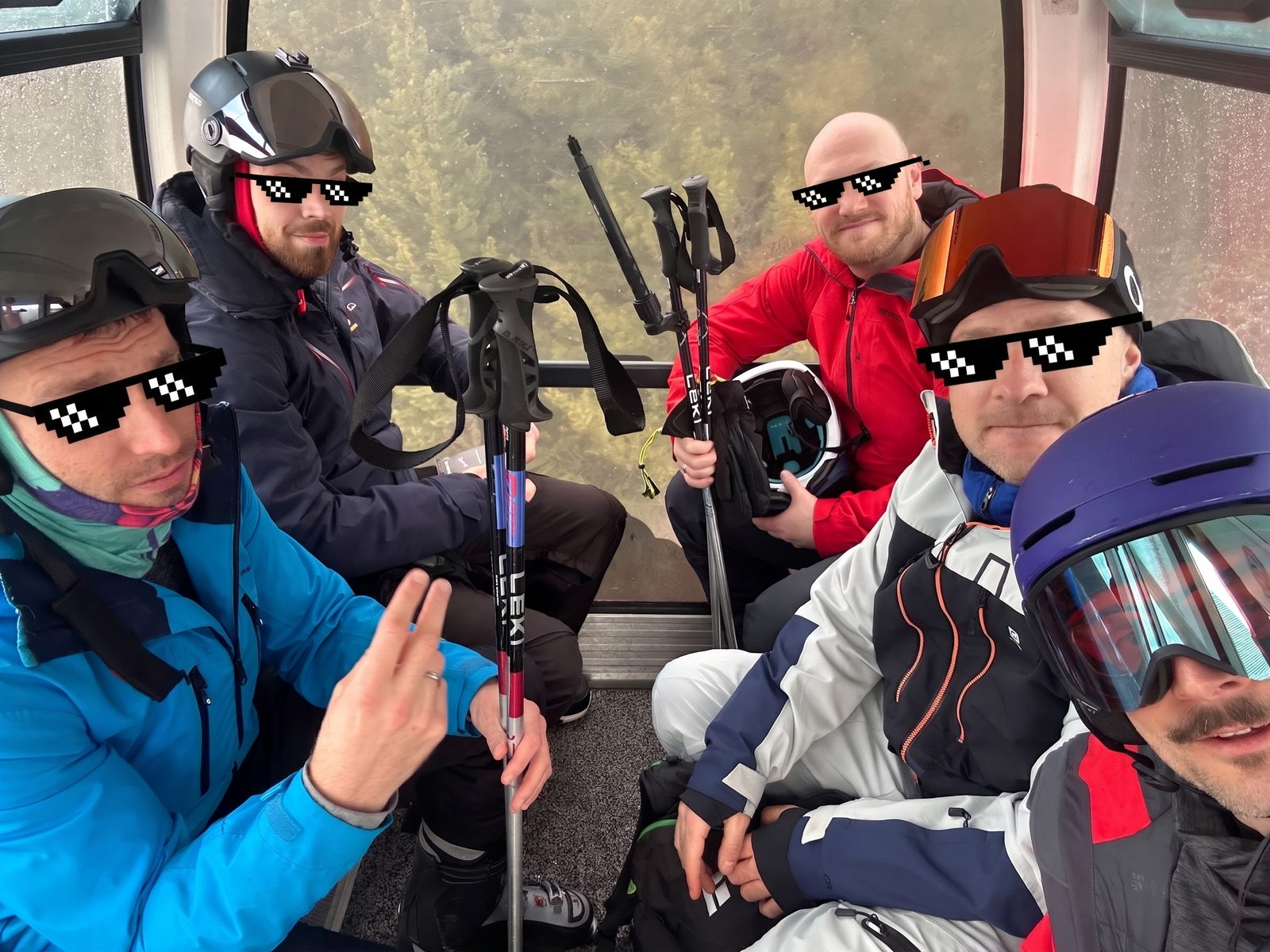
The first time I got off a lift with only red runs below me, I had not yet skied a blue.
It wasn’t even a friend who took me up there. It was my wife, and that lift went to the very top, where there were only red runs, somewhere in Italy or Austria. I don’t remember which, and it doesn’t matter.
I do remember the way down.
If you’re about to go skiing with people who can really ski, that’s the lift to stay off. And yet a few days at Grandvalira in Andorra with much better skiers helped me progress enormously. Both things came from people who could ski, which is why this article isn’t going to tell you to avoid them.
Let your friends help without making them your instructors
When I skied with more experienced friends at Grandvalira, those three or four days did a lot for my skiing, and the thing that helped most fitted in one sentence. One of them used to train martial arts with me, and we had a warm-up we did every time: hips to one side, hands to the other. He told me to remember that exercise and do exactly that on skis. I tried it and felt it immediately. One simple piece of advice can be what moves you on to the next step.
It would be lovely if every friend who skis beautifully could do that. Many can’t. They may have forgotten what the basics feel like, and they may have a rather different definition of “slow”. Neither makes them a bad friend; it makes them a skier who should get to enjoy their holiday, too.
So for a first trip, get an instructor for at least two or three days, start on green runs, and keep the trip itself short. An instructor’s job is to watch your skiing. A friend is on holiday. Your friends’ one good sentence will land better once you can already stop.
Think of the instructor and your friends as having different jobs. The instructor helps you learn. Your friends can ski with you later, on terrain you’ve already decided you’re comfortable with. It also saves your group from the familiar holiday conversation in which somebody insists they are explaining it clearly while somebody else would quite like a professional to take over.
Agree on the day before you reach the lift
The easiest time to discuss your limits is before anyone has clipped into skis. Once the group is moving, it’s tempting to nod along because you don’t want to be the person stopping to inspect the piste map.
Tell your friends your plan plainly: “I’m taking a morning lesson. Let’s meet afterwards, and I’ll decide then if I’m up for a run together.” You’re not asking them to wait beside a beginner slope all day. They can ski at their pace while you learn at yours.
This split fits how lessons often work. WeSki says standard group lessons usually run in the morning for two to three hours, leaving the afternoon free. You don’t have to fill the free time with more skiing. Beginner ski muscles tire quickly, particularly in the first few days, so an afternoon break may be the best use of it.
If you’re nervous about keeping up even in a lesson group, WeSki suggests a private lesson for one-to-one attention. You can decide what suits you without making your friends responsible for solving it.
Set a meeting point and time, too. A café is perfectly good; you don’t need to reunite at the top of a run. Later, if you want to ski together, choose the run together. If you would rather stop, meet them when they finish. It still counts as a trip with friends.
“It’s an easy red” is not a plan
That lift is still the clearest mistake I’ve made on skis. I hadn’t yet skied a blue. The way down those red runs was very, very long. Somehow I managed it, and my legs were in pain afterwards, which is about the most flattering account available. A stronger skier being able to handle a run tells you very little about how it will feel to you.
Piste colours help, but they aren’t a universal promise. European piste classifications differ in parts from country to country, although blue is used for easy runs, red for intermediate and black for expert runs. Green beginner areas are listed in countries including France and Spain; they can be broad, gentle areas rather than marked trails in the way you might picture one.
So if someone says, “It’s an easy red,” ask what that means for you. Have you been comfortable on blue runs? Do you know where the route goes? Can you choose a gentler option instead? Check the resort map, and ask your instructor or resort staff when you’re unsure. If the only way down from the top of a lift is a red, the time to learn that is before you get on it, which is the whole reason piste maps exist. Your friend’s description may be sincere. It still isn’t a substitute for knowing what you’re agreeing to.
For your first days, greens are a sensible place to begin. Skipping them impresses nobody, and moving up a colour because the rest of the group is bored won’t make the skiing easier. A good friend can go and enjoy a harder run, then meet you afterwards. Your job is to pick the run you’re ready for, not the one that keeps the group together at any cost.
Tell your friends what “ski together” means to you
People can mean different things by the same invitation. Your friend might picture a full day moving from run to run. You might picture a relaxed run after your lesson, followed by a drink. Neither version is wrong, but you’ll have a better day if you say yours out loud.
Be specific and skip the apology: “I’d like to join you on a gentle run after lunch, but I’m not going onto a red today.” Or: “If I’m tired after the lesson, I’ll meet you later instead.” A speech about your ability isn’t required. A clear limit is easier for everyone to work with.
It also gives your friends permission to ski properly. Nobody has to spend the day pretending they wouldn’t enjoy a harder run, and you don’t have to pretend you’re comfortable somewhere you aren’t. Meet up, split up, meet up again. Skiing with friends doesn’t require staying in a little procession from the first lift to the last.
And if a friend says they’ll take it slowly, remember that speed is only part of the question. The run itself still has to suit you. You can thank them for offering and say no.
Stop when you’re tired, not when the group is finished
I think beginners are most likely to get into trouble when they’re completely exhausted. Tired legs are a good reason to stop, even if your friends are keen for another run.
There’s a reason to be wary of the famous “one last run”. University of Utah Health says a majority of ski injuries happen in the late afternoon, often on that final run, and points to muscle fatigue as a major factor. You don’t need to calculate exactly how tired you are. If your legs are telling you they’ve had enough, listen.
This matters particularly when you’re trying not to slow down better skiers. It’s easy to think, “I’ll just do this one more so I don’t make a fuss.” But you aren’t making a fuss by stopping. You’re making a decision about your own skiing.
Don’t borrow their speed
If you’re starting skiing in your thirties or forties, don’t chase speed records, even when the person ahead of you makes fast skiing look effortless. You can enjoy their company without trying to match every turn or keep them in sight.
Progress is not just managing a run you didn’t think you could do. It can be finishing one you chose yourself and wanting to go again. It can be telling your friends you’ll see them later while they head somewhere steeper. Those decisions may not make for an impressive story over dinner, but they make for a better next day.
The better skiers in your life can hand you the one sentence that changes your skiing, the way a friend did for me at Grandvalira. They can also walk you to a lift you have no business taking. The trick is to accept the first and decline the second, which is much easier to do before anyone has clipped in.