Your First Ski Trip in Your 30s or 40s: Start Small, Ski More
“Will there even be enough skis?” I asked the man at the rental queue in Valdezcaray.
Probably not, he said. And it would be another two hours.
There wasn’t much snow anyway, it was very crowded, and in the end I didn’t ski at all.
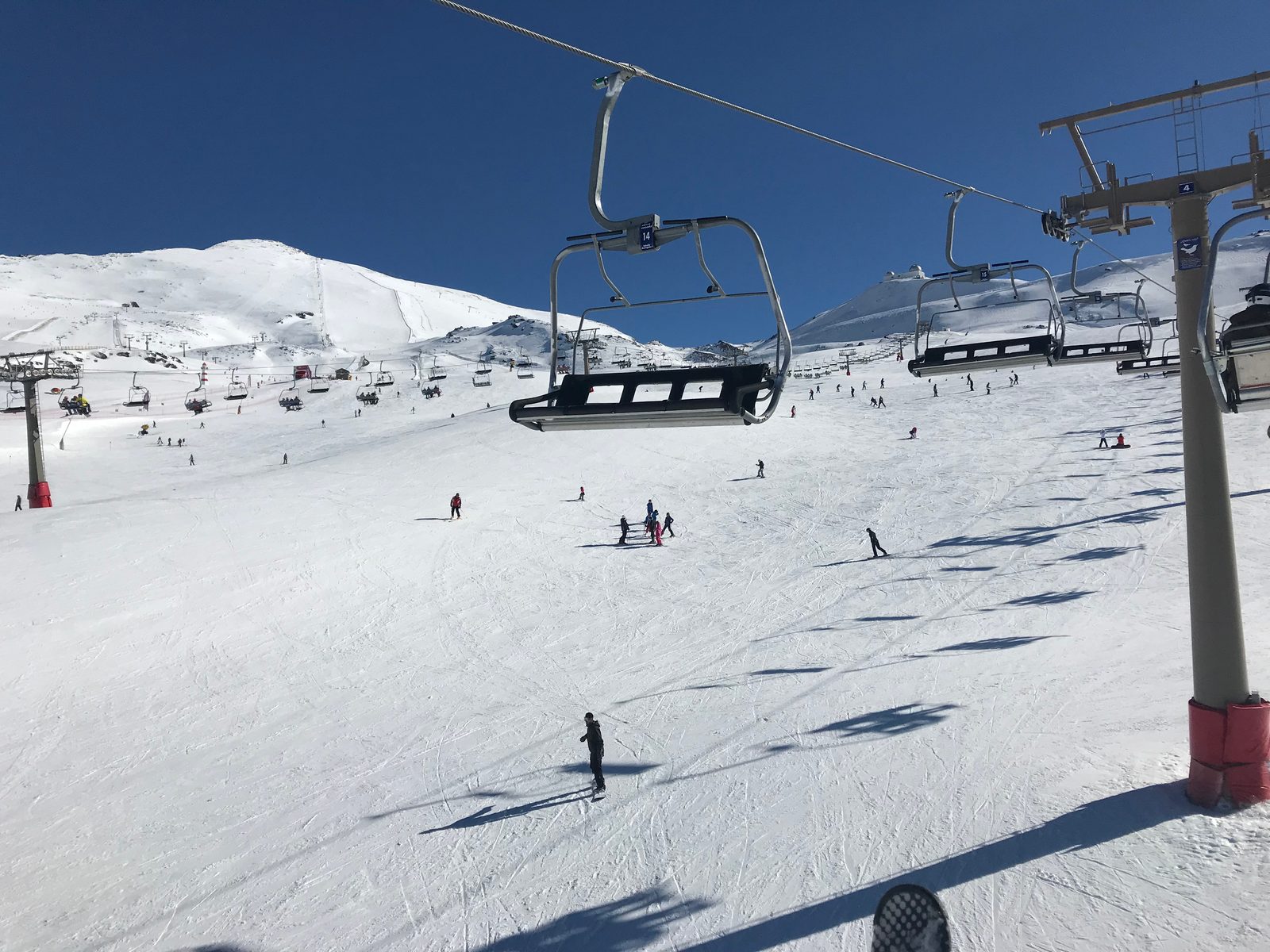
My actual first trip went better. I put on skis for the first time on my 33rd birthday, at Sierra Nevada, in February 2019, with no instructor, and spent about two hours on a green slope meant for children. It was a great trip. These days I’d tell you to take an instructor, and I’m still improving myself.
Are you too old to start at 30 or 40? Probably not. But you are old enough to resent paying for a trip to the mountains only to spend it in a queue, wearing boots that hurt.
I’d choose the French Alps, then look hard at the beginner area
If a friend asked me where to book a first ski trip, I’d point them towards the Alps, probably France, tell them to take an instructor, and keep the whole thing to three or four days. My reason for the Alps is a feeling and not a measurement: I think the general infrastructure is better there and the resorts friendlier. Part of that holds up. Snowthere’s Pyrenees guide calls the connected, doorstep-to-piste model an Alps speciality, says Pyrenean resorts more often mean a short walk or shuttle to the lifts, and puts the largest Pyrenean areas at around 100 km of runs against several times that for the big Alpine ones.
The same guide takes the other side on the question you actually care about. For beginners, it says, the size gap rarely matters, and Pyrenean lift passes often run a third cheaper. So treat my preference as a preference. The resort with the most impressive trail map is not necessarily the one that makes your first morning easy. You need a learning area you can reach without a complicated expedition, plus an instructor and a sensible way to get there.
The Pyrenees are a real option, though. I’ve skied at Saint-Lary-Soulan on the French side and at Grandvalira in Andorra. Saint-Lary makes the beginner choices unusually clear: its Première Glisse pass covers the two sheltered carpets at Pla d’Adet, while its Initiation pass adds more lifts when you’re ready to move on. Grandvalira also has a beginner pass covering the lifts in beginner areas across its sectors.
I’m less keen on sending a beginner to a Spanish resort, and you’ve already met the reason. One bad visit doesn’t describe every resort in a country: my first trip to Sierra Nevada was really good, with plenty of snow. But if the rental setup falls apart, the quality of the slopes becomes a rather academic question.
There’s also a small piste-map trap. You may have been told to “just stick to the blues,” but piste colours vary across Europe. France and Spain use green for learning areas, but don’t assume every resort has a green category. Even within France, a green may be a gentle open area rather than the long, scenic trail you pictured. Look at the resort’s actual beginner zone, where the lesson meets, and which lifts your pass covers.
Book the instructor before you buy the full lift pass
My first-day plan now would be simple: book an instructor for the first two or three days, start on green terrain where it exists, and let the lesson decide when to move on. I wouldn’t save money there. A patient friend can be lovely company, but knowing how to ski and knowing how to explain skiing to someone who has never stopped on skis are different skills.
I learned that lesson in another sport, too. After teaching myself inline skating from videos for years, one or two private lessons helped me learn parallel turns and basic braking, which was a breakthrough. I’d watched YouTube before my first ski trip as well; it can help you recognise a movement, but it can’t watch what your feet are doing and correct you.
Lessons need a place in the budget from the start. As one concrete example, ESF Arâches-la-Frasse in the French Alps lists six group lessons of 2.5 hours for €199 in high season in 2026/27. Other courses and prices vary by season. You don’t need to book six lessons because a price sheet says six; you do need to know what instruction will cost before the flights make the decision for you.
Then match the pass to the ground you’ll actually use (the ski pass article goes through the choices). On Saint-Lary’s 2026/27 price sheet, a one-hour Première Glisse adult pass is €21.50 until 12 March, sold only at the Pla d’Adet beginner-area ticket office, and it doesn’t include the lifts up from the village. The adult Initiation pass is €42 for one day or €84 for two days until 12 March; it includes the village access lifts and several lifts in the beginner area. If your lesson is on the carpets, ask whether you need more than the carpet pass that morning. Paying for a larger ski area while you learn to stop is like buying a motorway pass to practise parking.
For the first day, leave time to collect equipment and find the lesson meeting point. “Close to the lifts” deserves a closer look when you book accommodation. At Sierra Nevada, my small budget room was in the resort, but it was high up, about a 15-minute walk down to the nearest lift. A map pin that looks close and a walk in ski boots are not quite the same thing.
Put your money into boots; rent the skis
You won’t need your own skis for a first trip. I still rent mine: the rental shop adjusts them, and I can try different skis. Boots are where I’d be much fussier. Rental boots have hurt me probably half of the time, and having your own is nicer for hygiene. I recently bought Lange Shadow boots, which I like, though they still need heat-moulding to my feet. Buying boots is not the same as getting the fit finished.
Should you buy boots before you’ve had a single lesson? Only if you can budget for a proper fitting and expect to keep skiing. Otherwise, rent carefully for the first trip and consider buying once you know you want more. Either way, don’t accept “that’s just how ski boots feel” as an answer to pain.
A ski boot should feel snug, not like a comfortable walking shoe. According to Fall-Line’s boot-fitting advice, your toes may touch the front when you first step in, then come away once you buckle the cuff and flex forward. InTheSnow adds that your heel should stay held. Snug is useful. Numb is not a ski technique. If yours hurt, here’s what to say at the shop.
Four questions for the rental counter
- Can I try another size if my toes feel crushed or my heel lifts?
- Have you adjusted these skis and bindings for me?
- What do I do if the boots hurt after my first lesson?
- Where do I collect and return everything?
Walk and flex in the boots while you’re still in the shop, and don’t take a pair of skis simply because it looks about your height.
If the shop hands over gear without explaining anything, I take that as a bad sign. Ask until you understand what you’ve been given. Outside the rental shop, I’d also spend on a warm, water-repellent ski suit and leave the cheapest thing that looks vaguely wintery on the rack. Boots and goggles are the gear I pay most attention to, but staying warm and dry is a fairly basic requirement for enjoying a day outside.
Buy the dull insurance before you need the interesting rescue
Here’s the expense nobody puts in the holiday photos: getting you off the mountain. I always buy insurance at the resort, because evacuation is very expensive. Don’t assume a lift pass, a bank card or a general travel policy automatically covers the rescue you might need; read what each one actually says.
In France, on-piste rescue can be charged. A January 2025 report from The Connexion gives an average of €367 to rescue an injured skier and an average of €1,776 for helicopter evacuation. It also reports separate winter-sports cover available from around €3.50 a day or €10 a week. Set those side by side and “I’ll sort insurance later” looks less clever.
The bigger bills are possible too. PisteHors reports that a French resort rescue bill approaching €10,000 is not unusual in costly cases, and warns that some card policies cap rescue cover; it cites a €5,000 limit for Visa in France. Your own card may differ. At Saint-Lary, the 2026/27 price sheet lists basic on-piste rescue cover at €3.70 per person for a one-day pass.
So before paying, ask what the resort add-on covers, where it applies, and whether your existing insurance already covers piste rescue and evacuation. Here’s what a rescue really costs. A few minutes reading small print is boring. Receiving an itemised rescue bill would be considerably more absorbing.
Get your legs ready, and forget about speed
Starting at 30 or 40 has one real consequence: you’re not as flexible or as mobile as you were, so this is no time to chase speed records. What helps before a trip is unglamorous. I recommend balance work, the sort of thing that’s as useful for surfing and inline skating as it is for skiing. I do single-leg RDLs, slowly, and side-to-side hops. It doesn’t have to take over your life: I think 15–20 minutes every other day is more than enough, with a good warm-up before and a cool-down after. Nobody has ever been asked to show their single-leg RDLs at a ticket office, but your knees and your ego will notice the difference by the second afternoon.
Skip the “one last run” when your legs say no
Take this part seriously if you’re an adult beginner. My main skiing mistake was being taken up to a run I wasn’t ready for. Skiing with more experienced friends later, at Grandvalira, helped me improve a lot, but good friends for a beginner need to respect a “not this one” as well as offer encouragement. Your lesson level is a better guide than someone else’s memory of how easy a run felt.
Fatigue makes that decision harder. I think beginners should rest when they’re exhausted, and there’s evidence behind being wary of the final push: a University of Utah Health discussion of ski injuries says many happen late in the afternoon, often on that extra run, when muscles are tired. You don’t need to wait until you can barely turn to call it a day. If your form is going and you’re negotiating with yourself to get through another descent, stopping is a sensible decision.
A break doesn’t have to mean sitting inside while everyone else has fun. At Eggalm in Austria at Christmas 2019, I went sledding with my daughter, who was four. The run took about 20–25 minutes and was really fun. A sledge is a perfectly good way to enjoy the mountain without pretending your legs have another ski run in them.
And don’t worry if the first trip doesn’t turn you into a regular immediately. After Eggalm, my next ski trip was Merano 2000 in Italy in January 2022. Progress can have gaps. What matters on your first trip is learning enough that you want to come back, not collecting as many runs as possible.
If you do one thing first, book the beginner lessons. Then choose a resort and accommodation that make those lessons easy to reach. The skis, pass and view can follow.